
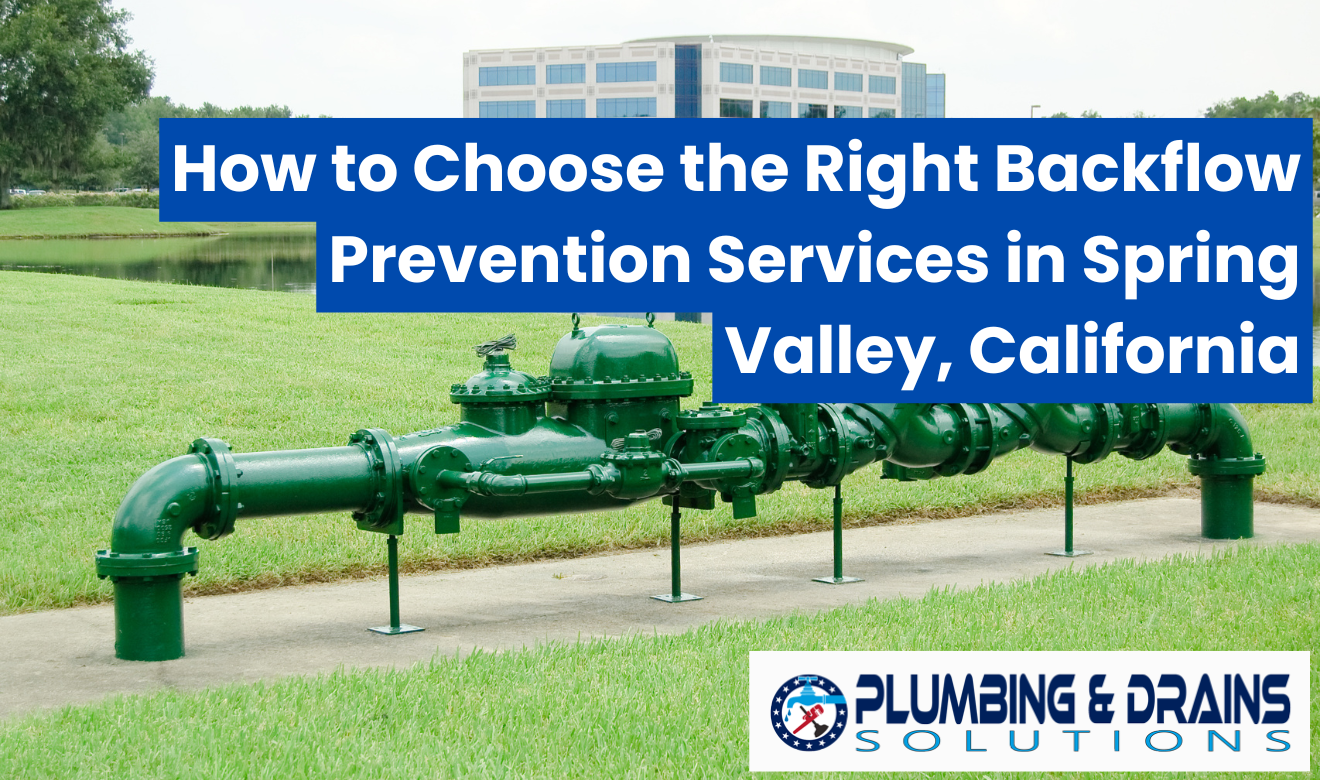
Executive Summary
To choose backflow prevention services Spring Valley confidently, prioritize certified providers who understand local water purveyor requirements, use calibrated equipment, and deliver clear test documentation and on-time reporting. The best choice is a company that can test, explain results, repair/retest when needed, and keep you compliant with annual deadlines through scheduling flexibility and reminders.
Key Takeaways
- Choose certified, code-aware providers: Confirm licensing/certification and proven familiarity with Spring Valley reporting rules, forms, and due dates to avoid compliance issues.
- Match expertise to your device type: Ensure the provider can correctly identify and service your assembly (RPZ, DCVA, PVB, SVB) based on your property’s specific risk and installation.
- Demand a repeatable, documented test process: A proper test includes calibrated gauge readings, correct device-specific procedures, and complete paperwork (model/serial, readings, pass/fail).
- Prioritize transparency on failures, pricing, and repairs: Select a tester who can show gauge results, explain what failed, and provide itemized estimates separating testing, labor, parts, and retesting.
- Reduce downtime with scheduling and compliance support: The right provider offers flexible appointments, coordinates shutdowns for businesses and multi-tenant sites, and submits reports with reminders to prevent missed deadlines.
To choose backflow prevention services Spring Valley, focus on licensing, local code compliance, and clear documentation—then confirm they can test, repair, and certify your device on schedule. For example, ask if they handle annual backflow testing reports for residential irrigation systems, apartment complexes, and restaurants with commercial kitchens. Make sure they can identify your specific setup, like an RPZ on a fire sprinkler line or a double-check valve on a landscape irrigation meter. If a tester can explain what failed, show you the gauge readings, and give a straightforward repair estimate without vague add-ons, you’re likely in good hands. Finally, pick a provider who can offer flexible appointment windows and reminders, so you don’t miss a required test date.
What backflow prevention is—and why it matters in Spring Valley
Backflow is the unwanted reversal of water flow that can pull contaminants into your potable water supply. It typically happens due to:
- Backsiphonage (a sudden pressure drop in the supply line, like a main break or heavy hydrant use)
- Backpressure (downstream pressure becomes higher than supply pressure, common with pumps, boilers, and some fire systems)
When you choose backflow prevention services Spring Valley, you’re not just “checking a valve.” You’re protecting drinking water, tenants, customers, irrigation zones, and any connected equipment.
Industry guidance supports this risk-based approach. The U.S. Environmental Protection Agency notes cross-connections can allow contaminants into drinking water systems if backflow occurs—one reason many utilities require testable devices and periodic verification.
How to choose backflow prevention services Spring Valley: the 10-point checklist
If you want to choose backflow prevention services Spring Valley with confidence, use this quick checklist during your first call or quote request:
- Proper licensing and certification for backflow testing in your jurisdiction
- Knowledge of local water purveyor rules (forms, due dates, device requirements)
- Ability to test, repair, and retest the same visit when possible
- Clear documentation: test results, pass/fail, serial/model, location, photos if needed
- Calibrated gauges with proof of calibration available upon request
- Experience with your device type (RPZ, DCVA, PVB, SVB, etc.)
- Transparent pricing (testing fee vs. repair parts/labor separated)
- Communication quality: explains failures and shows readings
- Scheduling flexibility plus reminders before annual due dates
- Safety and compliance: shut-down coordination for restaurants, apartments, and fire lines
Using this list makes it much easier to choose backflow prevention services Spring Valley that won’t leave you scrambling after a failed test or missed deadline.
What device do you have? (RPZ vs DCVA vs PVB)
A big part of choosing right is matching the tester to your device and setup. Here’s a fast way to identify what’s installed:
| Device type | Common Spring Valley use | Why it matters for testing/repairs |
|---|---|---|
| RPZ (Reduced Pressure Zone) | High-hazard lines: commercial kitchens, some fire sprinkler setups, chemical injection, certain irrigation configurations | Has a relief valve discharge; failures can leak water and require prompt rebuild/retest |
| DCVA (Double Check Valve Assembly) | Fire lines (where allowed), some commercial services, low-to-moderate hazard applications | Two check valves; can fail from debris/wear—often repairable with check kits |
| PVB (Pressure Vacuum Breaker) | Residential irrigation systems | Must be installed above downstream piping; freeze damage is a common issue |
| SVB (Spill-Resistant Vacuum Breaker) | Some irrigation systems where “spilling” needs to be minimized | Different behavior during shutoff; tech should know model-specific test steps |
When you choose backflow prevention services Spring Valley, ask the provider to confirm the exact device type, location, and accessibility before arrival (for example: “RPZ in a box at the sidewalk,” or “PVB on the side yard after the irrigation shutoff”).
Why annual backflow testing gets required (and why skipping it can get expensive)
Many water providers require periodic testing for testable backflow assemblies—often annually—because devices are mechanical and can fail from:
- Mineral buildup and scale
- Debris on check valve seats after line work
- Worn springs, o-rings, and rubber seals
- Thermal expansion and pressure fluctuations
- Freeze damage (common on exposed irrigation devices)
Utilities and public health agencies treat cross-connection control as a preventive program. The American Water Works Association (AWWA) and USC Foundation for Cross-Connection Control and Hydraulic Research have long published guidance used by water systems to reduce risk from cross-connections and backflow.
Practically, skipping required testing can lead to notices, penalties, or service interruptions depending on local policy. That’s why it’s smart to choose backflow prevention services Spring Valley that offers reminders and submits reports correctly.
How a proper backflow test should look (step-by-step)
To choose backflow prevention services Spring Valley that actually protects you, confirm they follow a documented, repeatable process. A professional test typically includes:
- Pre-check: verifies device make/model/serial, checks for leaks, confirms shutoffs operate, and ensures safe drainage
- Gauge hookup: connects calibrated differential pressure gauge to test cocks
- Test sequence: runs the correct procedure for the device type (RPZ/DCVA/PVB/SVB)
- Readings recorded: notes check valve “hold” values and relief valve opening points where applicable
- Pass/fail explanation: tech explains which check failed and why it matters
- Paperwork: completes the test report with all required fields and submits per local requirements
A good sign: the tester can show you the gauge readings and explain them in plain language—exactly the type of clarity you want when you choose backflow prevention services Spring Valley.
Cost: What you’ll pay for testing and what changes the price
Pricing varies by property type and device complexity, but the cost typically depends on:
- Number of devices (apartments and commercial sites often have multiple assemblies)
- Device type and size (larger RPZ/DCVA assemblies take longer and cost more to rebuild)
- Accessibility (vaults, tight utility rooms, buried boxes, or blocked shutoffs add labor)
- Same-day repair needs (parts availability and severity of failure)
- After-hours scheduling (restaurants and multi-tenant buildings often need off-peak work)
To choose backflow prevention services Spring Valley wisely, request itemized pricing that separates:
- Testing fee
- Repair labor (hourly or flat-rate)
- Replacement parts (check kit, relief kit, seals)
- Retest fee (some include it with repair, some don’t)
What failed? Common backflow test failures and what they usually mean
If you’re trying to choose backflow prevention services Spring Valley, pick someone who can pinpoint failures quickly and explain them without vague add-ons. Common issues include:
- Check valve won’t hold: debris on the seat, worn rubber, weak spring, or damaged check assembly
- RPZ relief valve discharges: fouled relief seat, torn diaphragm, or differential pressure problem
- Shutoff valves don’t close fully: packing wear, seized stems, or internal damage—can make testing impossible until repaired
- Frozen/cracked body (irrigation): often requires full replacement, not a rebuild
Real-world example: after street-side utility work, it’s not unusual for disturbed sediment to move through lines and lodge in a check valve seat. A thorough tester will mention recent line work as a possible cause and recommend flushing or upstream filtration where appropriate.
How to compare providers quickly (questions to ask on the phone)
Use these questions to choose backflow prevention services Spring Valley based on competence, not just availability:
- “Are you certified to test backflow assemblies here, and can you provide proof if requested?”
- “Do you submit the test report to the water provider, or do I?”
- “Are your gauges calibrated, and how often?”
- “If it fails, can you repair and retest the same visit?”
- “Will you show me the readings and explain the failure?”
- “Do you carry common rebuild kits for my device type (RPZ/DCVA/PVB)?”
- “Can you work around tenant/business hours to avoid downtime?”
When you choose backflow prevention services Spring Valley, the best providers answer these clearly—without dodging details.
How backflow ties into other plumbing risks on your property
Backflow problems don’t exist in isolation. Pressure spikes, aging piping, and recurring clogs can all influence water quality risk and device wear. If your property has older drain or sewer infrastructure—especially cast iron—maintenance planning matters. If you’re seeing frequent stoppages or slow drains, it can be helpful to review drain maintenance guidance to reduce backups and prevent messy cross-connection scenarios in utility rooms and mechanical spaces.
For broader context on how plumbing systems are designed to manage flow, pressure, and contamination risks, see plumbing.
How to prepare for a backflow appointment (so the test doesn’t get delayed)
A few quick steps help the test go smoothly—especially for apartments, restaurants, and properties with locked mechanical rooms:
- Clear access to the device and shutoffs (remove storage items, unlock gates/rooms)
- Notify occupants if water will be briefly interrupted
- Confirm device location (front yard box, side yard, riser room, above ceiling, etc.)
- Know the account requirements if your water provider requires a specific form or portal submission
- Plan for discharge (RPZ relief discharge may release water; ensure drainage won’t damage finishes)
This is another practical reason to choose backflow prevention services Spring Valley that asks good questions before arriving.
Why documentation and reporting matter as much as the test
Even a perfectly performed test can become a headache if the paperwork is incomplete. When you choose backflow prevention services Spring Valley, insist on documentation that is:
- Complete: device make/model/serial, size, location, readings, pass/fail
- Legible and timely: submitted before the deadline
- Traceable: includes tester certification details and gauge information as required
For property managers, good reporting reduces repeat phone calls, missed compliance dates, and tenant complaints.
When replacement is smarter than repair
Repairs are common, but replacement is sometimes the more reliable choice. A qualified pro will recommend replacement when:
- The body is cracked (often freeze-related on irrigation devices)
- The device is obsolete or parts are difficult to source
- Repeated failures happen despite proper rebuilds (suggesting upstream debris or incorrect installation)
- Valves are severely corroded or shutoffs cannot be restored to safe operation
If you choose backflow prevention services Spring Valley that provides side-by-side options (repair vs. replace) with a clear cost and reliability tradeoff, you’ll avoid paying repeatedly for short-term fixes.
Related service that can protect your system long-term
Pressure instability is a common contributor to plumbing wear and can stress backflow assemblies over time. If you’ve noticed banging pipes, fluctuating pressure, or frequent fixture issues, consider checking Water Pressure Regulators to keep system pressure within a safer, steadier range.
“Pass, fail, fixed”: A simple way to pick the right provider
To choose backflow prevention services Spring Valley without overthinking it, judge the provider on three outcomes:
- Pass: they test correctly, document clearly, and submit on time
- Fail: they can prove the failure with readings and explain the risk
- Fixed: they can repair, retest, and certify with straightforward pricing
Look for professionals who can demonstrate real cross-connection control competence: backflow tester certification, familiarity with recognized guidance (such as AWWA/USC FCCCHR methodologies), calibrated test equipment, and a track record working across residential irrigation, multi-family properties, fire lines, and commercial kitchens. If they can meet those standards and keep you on a predictable annual schedule, you’ve made the right decision to choose backflow prevention services Spring Valley.
Frequently Asked Questions
Stop Guessing on Backflow Compliance—Get It Tested, Documented, and Filed
If you’re trying to choose backflow prevention services Spring Valley and want it done right the first time, Plumbing & Drain Solutions of Spring Valley makes it simple: certified testing, clear pass/fail documentation, straightforward repair options if something doesn’t hold, and help staying on top of annual due dates. Book your backflow test today and get peace of mind knowing your device is tested properly—and your paperwork is handled.


