
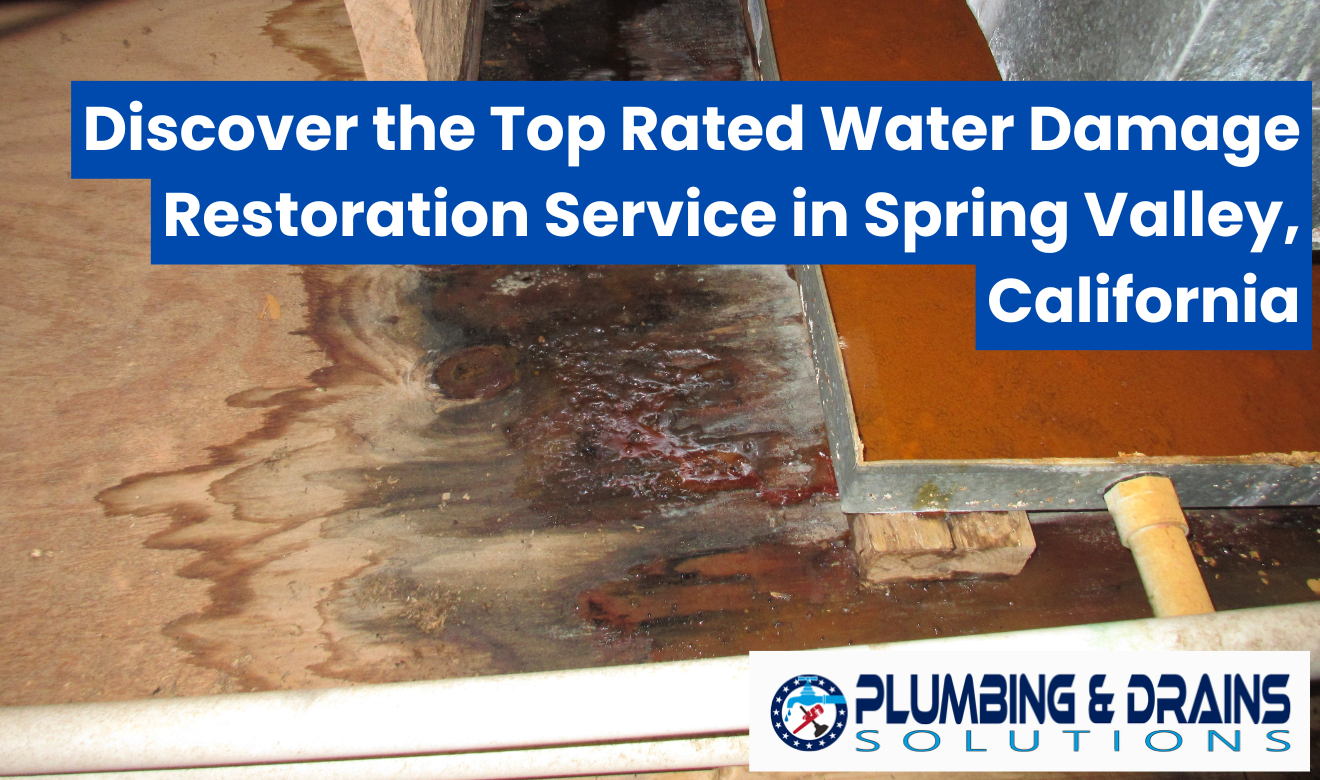
A top rated water damage restoration service Spring Valley resolves water intrusion by stopping the source, extracting water, drying the structure to verified moisture targets, and restoring the property to a safe pre-loss condition with documented proof. The definitive standard is measurable drying and correct contamination controls (especially for Category 2/3 losses), not “fan-only” drying or undocumented cleanup.
- Verified Drying (Not Guesswork): Top providers moisture-map with thermal imaging plus pin/pinless meters, set a dry standard using unaffected comparison readings, and confirm stable results with daily psychrometric logs and final clearance-style checks.
- Correct Category Handling Drives Safety: Water category (1–3) determines removal vs. salvage and triggers requirements like containment, negative air, HEPA filtration, PPE, and antimicrobial application when sewage or significant contamination is present.
- Documentation Protects the Outcome (and the Claim): A defensible job includes a written scope separating mitigation from rebuild, equipment calculations and placement notes, dated photos, and complete moisture/equipment logs proving the structure was dried and restored properly.
A top rated water damage restoration service Spring Valley is a licensed local team that stops active water intrusion, removes water, dries structures to verified moisture targets, and restores the property to a safe pre-loss condition. In Spring Valley, California, this work often starts with rapid extraction after slab leaks, overflowing toilets, supply-line failures under sinks, or rainwater entry near Campo Road, Sweetwater Road, and hillside neighborhoods where runoff can push water into garages and crawlspaces. Crews typically map moisture with thermal imaging and pin meters, then set commercial air movers and LGR dehumidifiers to dry drywall, baseboards, cabinets, and framing without unnecessary demolition. Category 2 or Category 3 losses require containment, negative air, and antimicrobial application to control bacterial load, especially when sewage affects bathrooms, laundry rooms, or floor drains. A thorough job also includes controlled drying logs, daily humidity readings, and final clearance checks so hidden moisture does not cause mold growth behind tile, under LVP flooring, or inside wall cavities.
What “Top Rated” Restoration Means in Spring Valley (Standards, Not Slogans)
A truly top-tier water damage response in Spring Valley is measured by documented moisture control, safe contamination handling, and code-compliant repairs—not by how fast a fan gets dropped off. The benchmark is whether the structure is dried to verifiable targets and rebuilt to a safe, pre-loss condition.
In California, water intrusion restoration often overlaps with regulated trades and safety requirements. A high-quality provider will align work with:
- IICRC S500 (industry standard for professional water damage restoration) for assessment, drying plans, monitoring, and documentation.
- IICRC S520 (mold remediation standard) when visible growth or conditions conducive to mold exist.
- California Building Code (CBC) and California Residential Code (CRC) requirements when repairs involve drywall fire rating continuity, insulation, or structural components.
- Cal/OSHA safety practices for exposure control when sewage (Category 3) or demolition dust is present.
In practical terms, “top rated” means your file contains moisture maps, equipment calculations, daily readings, and a clear scope separating mitigation (drying and cleaning) from rebuild (repairs and finishes).
Immediate Actions That Prevent Escalation (First 60–120 Minutes)
The first two hours after a loss determine how much material can be dried in place versus removed. Fast shutoff, extraction, and controlled drying reduce secondary damage such as swelling, delamination, and microbial amplification.
In Spring Valley homes, common first-step priorities include isolating supply-line failures under sinks, toilet overflows, and slab leak migration under flooring. A credible response sequence looks like this:
- Stop the source: shut off the nearest fixture valve or the main water shutoff; if the shutoff is seized or unknown, prioritize safe isolation before extraction.
- Verify electrical safety: water near outlets, panel areas, or HVAC equipment requires power isolation where necessary.
- Extract standing water: truck-mount or portable extraction with weighted tools for carpet, plus squeegee extraction on hard surfaces.
- Protect unaffected areas: floor runners, corner guards, and containment when contamination or demolition is planned.
- Start drying only after inspection: drying without mapping can trap moisture behind finishes and prolong the job.
If drainage backup is involved, scheduling sewer video inspection early can confirm whether a blockage, root intrusion, or line failure is driving repeated overflows.
Water Categories and Why They Change the Entire Work Plan
Water is classified by contamination level, and the category determines what can be cleaned, what must be removed, and what safety controls are mandatory. Misclassifying a Category 3 event as “clean water” is a common cause of recurring odor and microbial problems.
Standard water categories used in restoration:
- Category 1 (Clean): supply-line leaks (initially), tub overflow without contaminants, water heater tank leak (not from sewer). Drying-in-place may be possible if response is rapid.
- Category 2 (Significantly contaminated): dishwasher discharge, washing machine overflow, some toilet overflows with urine but no feces. Requires higher cleaning and selective removal based on porous saturation.
- Category 3 (Grossly contaminated): sewage, rising water from ground, toilet overflow with feces, or any water with pathogens. Requires containment, PPE, HEPA filtration, and removal of affected porous materials.
In Spring Valley, Category 3 scenarios frequently appear in bathrooms and laundry rooms when floor drains or sewer laterals surcharge during heavy flow events. When this occurs, the mitigation plan should include negative air, HEPA vacuuming, and disinfectant application labeled for the target organisms and surfaces.
How Moisture Mapping Is Performed (And What “Dry” Actually Means)
Professional drying is guided by measurement, not guesswork. The goal is to return materials to a “dry standard” verified against unaffected areas of the same material in the same structure.
Moisture mapping typically includes:
- Thermal imaging to identify temperature differentials consistent with moisture patterns (used to guide inspection, not as final proof).
- Non-invasive meters for rapid screening across drywall and ceilings.
- Pin meters for quantitative readings in framing, baseboards, and subfloor edges.
- Hygrometers to track ambient relative humidity (RH), temperature, and calculated grains per pound (GPP).
“Dry” is established when:
- Measured readings meet the project’s defined dry standard (unaffected comparison points).
- Materials show stable readings over time (no rebound after equipment removal or reduction).
- Hidden cavities (behind vanity toe-kicks, at wall bottom plates, under floating floors) are verified, not assumed.
Drying Systems Used in Spring Valley Homes (Equipment and Placement Logic)
Effective drying uses controlled airflow, dehumidification, and temperature management sized to the loss. Correct placement is about pressure differentials and evaporation rates, not the number of fans.
Core tools and why they matter:
- Commercial air movers: accelerate evaporation at wet surfaces; placement targets wet wall lines, cabinetry bases, and flooring transitions.
- LGR dehumidifiers: remove moisture from air efficiently at low humidity; essential for tight homes and cool coastal-influenced nights.
- HEPA air scrubbers: used when demolition dust, Category 2/3 contamination, or potential mold conditions exist.
- In-wall or cavity drying systems: targeted drying behind baseboards or in wall cavities to reduce demolition when appropriate.
Technicians should document equipment counts, locations, and the psychrometric readings that justify changes (adding/removing units) during daily monitoring.
Spring Valley Loss Types That Require Specialized Mitigation Tactics
Local building styles and site drainage patterns create repeatable water pathways. Addressing these patterns early helps prevent concealed damage in garages, crawlspaces, and hillside-facing walls.
Common scenarios and the technical response:
- Slab leak migration: moisture travels under flooring and along bottom plates; requires perimeter readings, possible test holes, and subfloor evaluation.
- Overflowing toilet impacts: water can wick into drywall and vanity toe-kicks; Category classification drives removal decisions for baseboards and insulation.
- Under-sink supply line failures: swelling in particleboard cabinet floors often cannot be restored to pre-loss strength; drying may not equal salvage.
- Rainwater intrusion at garages: wind-driven rain and runoff can enter at door thresholds; drying must include sill plates and lower wall sections.
- Crawlspace wetting: requires vapor barrier evaluation, dehumidification strategy, and inspection for wood moisture content stabilization.
If older piping is contributing to repeated leaks or backups, reviewing conditions like deteriorated cast iron can be critical; see cast iron replacement considerations where corrosion and scale lead to chronic restrictions and failures.
Document Control: Drying Logs, Photos, and Clearance Checks
Documentation is the difference between a defensible restoration and an undocumented “cleanup.” Insurers, property managers, and future buyers rely on these records to confirm proper mitigation.
A complete file typically includes:
- Initial assessment: affected rooms, water source, category, and class of loss (evaporation load).
- Moisture map: readings by room and material type with dates.
- Psychrometric log: temperature, RH, and dehumidifier performance notes.
- Equipment log: model types, quantities, and placement changes.
- Photo set: pre-mitigation, during extraction/drying, post-dry standard verification.
Final verification should include clearance-style checks for hidden moisture (not a lab test unless microbial conditions warrant it) and confirmation that removed components (like wet insulation) were properly replaced during rebuild.
Critical Table: Water Damage Restoration Metrics That Affect Cost, Timeline, and Safety
Restoration outcomes depend on measurable technical factors such as contamination category, material porosity, and drying verification. The table below consolidates the main metrics that determine scope, controls, and local best practices.
| Feature / Metric | Specifications | Local Guidelines |
|---|---|---|
| Water category (1–3) | Category 1 = clean supply water; Category 2 = significant contaminants; Category 3 = sewage/unsanitary water with pathogens | Spring Valley bathroom/laundry and floor drain events should be treated conservatively; Category 3 requires containment, HEPA filtration, PPE, and porous removal where affected |
| Moisture verification method | Thermal imaging for locating; pin/pinless meters for confirming; dry standard established via unaffected comparison readings | Verify typical hiding points: behind baseboards, vanity toe-kicks, under LVP edges, garage sill plates, and crawlspace framing near vents |
| Drying equipment set | Air movers for evaporation; LGR dehumidifiers for moisture removal; HEPA scrubbers for airborne particulate/microbial control | Coastal-influenced humidity swings require daily psychrometric checks; avoid “fan-only” drying without dehumidification in enclosed homes |
| Materials at highest risk of non-salvage | Particleboard cabinet bases, swollen MDF trim, contaminated carpet pad, wet insulation, delaminated engineered wood | If contamination is present, prioritize removal over attempted salvage; document disposal and replacement scope to meet pre-loss condition expectations |
| Containment and negative air trigger | Required when sewage, extensive demolition dust, or suspected mold conditions exist; uses poly sheeting, zipper doors, and HEPA exhaust | Multi-room losses in occupied homes should isolate pathways to HVAC returns and sleeping areas; maintain clean-to-dirty workflow |
Plumbing Failures That Commonly Cause Repeat Water Damage (And How to Break the Cycle)
Restoration is incomplete if the property remains vulnerable to the same failure mode. The long-term fix often involves targeted plumbing repair, drainage correction, or replacement of degraded piping.
Frequent repeat causes in residential properties:
- Partially blocked building drains leading to tub or toilet backups during high flow.
- Aging angle stops and supply lines under sinks and toilets that fail without warning.
- Slab line pinhole leaks that reappear after spot repairs if the pipe is broadly degraded.
- Improperly graded yard drainage that channels runoff toward garages or lower entries.
Many water losses start as a plumbing system performance issue. Reviewing the basics of plumbing system components—supply, DWV (drain-waste-vent), and fixtures—helps property owners understand why a backup at one fixture can indicate a deeper restriction in the main line.
How to Choose a Restoration Provider in Spring Valley (Verification Checklist)
The safest way to select a provider is to demand measurable deliverables and contamination controls in writing. A qualified team will explain what they will measure, what they will remove, and how they will prove drying completion.
Use this selection checklist:
- Written scope that identifies water source, category, and affected materials by room.
- Moisture mapping plan with defined dry standard and final verification steps.
- Contamination controls (containment/negative air) for Category 2/3 or microbial risk.
- Daily monitoring cadence with logged RH/temperature and material readings.
- Clear separation of mitigation vs. rebuild so you understand what is included now versus later.
A provider who cannot explain why certain drywall sections must be removed (or why they can be dried in place) is not operating at a professional standard.
Restoring to Pre-Loss Condition Without Hidden Moisture or Odor
High-quality restoration ends only when the structure is demonstrably dry, contamination is controlled, and the rebuilt areas match safe pre-loss function. The key deliverable is verified drying plus correct repair sequencing so trapped moisture does not create future mold or odor issues.
For Spring Valley properties, the most reliable outcomes come from a process-driven approach: stop the intrusion, extract thoroughly, map moisture with meters (not just cameras), run properly sized air movement and LGR dehumidification, and document daily progress until dry standards are met. When losses involve sewage or significant contamination, containment and HEPA filtration are non-negotiable controls. Finally, connecting mitigation findings to permanent plumbing or drainage corrections prevents repeat losses and protects the long-term value of the home.
Frequently Asked Questions
Don’t “Dry It Out” and Hope—Get Spring Valley Water Damage Handled the Right Way, Fast
Water damage doesn’t get better with time—it gets more expensive, more invasive, and a lot harder to prove was fixed correctly. What starts as a simple leak can turn into swollen cabinets, delaminated flooring, electrical hazards, and hidden moisture trapped behind baseboards and inside wall cavities that quietly feeds mold and odor for weeks.
And here’s the part most homeowners don’t realize: running a few fans can actually make things worse. If moisture isn’t mapped and dried to verified targets, you can end up “drying the air” while the structure stays wet. That’s how you get rebound moisture, damaged drywall fire rating continuity after improper removal, and contamination spread when Category 2 or Category 3 water is treated like a basic cleanup.
A licensed local team with the right meters, extraction tools, LGR dehumidifiers, and documentation process can stop active intrusion, control contamination, and dry to a real standard—so you’re not left guessing, redoing repairs, or fighting recurring mold smells later.


