
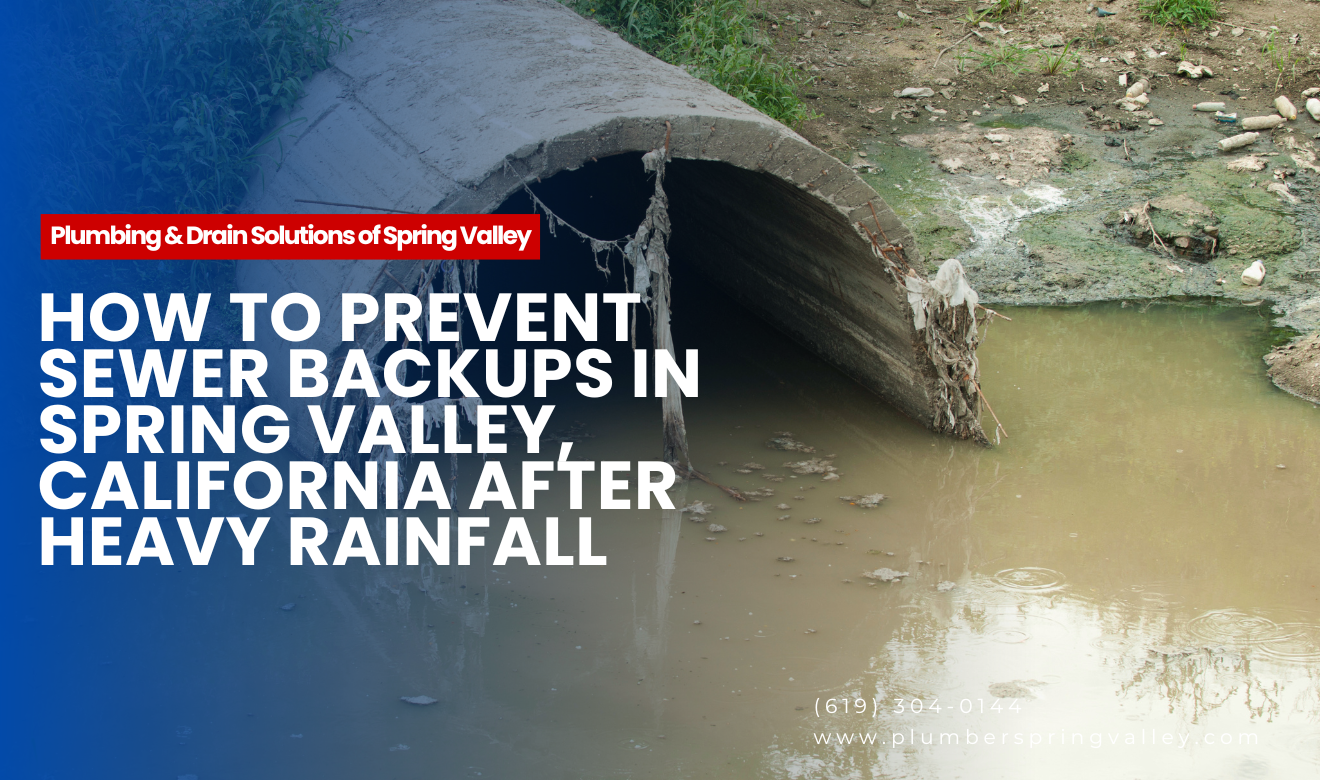
If you’re wondering why sewer backs up after rain Spring Valley, it’s usually because heavy runoff overwhelms the sewer system or forces groundwater into cracked pipes, pushing wastewater back toward the lowest drains in your home. You might notice gurgling in the toilet after a downpour, a shower that drains slowly, or water coming up through a floor drain in the garage or laundry room. In Spring Valley, clogged mains, tree roots, and older or damaged sewer lines can make the problem worse when rain hits hard. The good news is you can reduce the risk by keeping cleanouts accessible, avoiding pouring grease down drains, and acting fast at the first sign of bubbling, odors, or repeated slow drains.
Why Sewer Backups Get Worse After Storms in Spring Valley
When homeowners search why sewer backs up after rain Spring Valley, they’re usually dealing with a sudden change: drains that worked fine yesterday start acting up right after a storm. Heavy rain can turn a “borderline” sewer line into a full-on backup because the system is under extra pressure from runoff, saturated soil, and higher flow through neighborhood mains.
In many Spring Valley neighborhoods, older pipe materials, shifting soil, and years of buildup mean the sewer system may not have much “extra capacity” when rain hits hard—so any weak point (partial clog, root intrusion, or cracked pipe) shows up fast.
Quick Answer: Why Sewer Backs Up After Rain in Spring Valley
Why sewer backs up after rain Spring Valley usually comes down to one (or more) of these conditions:
- City sewer main surcharge: Heavy rainfall overwhelms the municipal sewer main, pushing wastewater back toward homes at low elevation.
- Root intrusion: Roots swell and shift in wet soil, worsening blockages in older lines.
- Broken or offset sewer line: Saturated soil can move, separating pipe joints and letting in debris and groundwater.
- Grease and sludge buildup: Storm pressure exposes slow drains that were already narrowed by buildup.
- Stormwater infiltration: Groundwater seeps into cracked sewer pipes, adding flow that the line can’t handle.
Common Signs You’re Experiencing a Rain-Triggered Sewer Backup
If you’re trying to confirm why sewer backs up after rain Spring Valley, look for these high-signal symptoms (especially within hours of heavy rain):
- Gurgling sounds in toilets or shower drains
- Water rising in a toilet when you run a sink or washer
- Slow drains throughout the home (not just one fixture)
- Sewer odor near floor drains, tubs, or laundry areas
- Water backing up through a lowest drain (garage, basement, first-floor shower)
- Wet patches in the yard near the sewer line path
What’s Actually Happening Underground During Heavy Rain
Understanding why sewer backs up after rain Spring Valley is easier when you picture the sewer line as a “pipe highway.” In dry weather, wastewater flows downhill with room to spare. During storms:
- The ground becomes saturated, raising groundwater levels around pipes.
- Cracks and joints can allow infiltration (extra water enters the sewer).
- Municipal systems may receive excessive inflow from storm drains, illegal downspout tie-ins, or aging infrastructure.
- Flow demand spikes, and the path of least resistance may become your home’s lowest drain.
According to the U.S. Environmental Protection Agency, infiltration and inflow are major contributors to sewer overflow events in many communities, especially where aging pipes allow stormwater into sanitary lines. This is a key piece of why sewer backs up after rain Spring Valley in areas with older infrastructure.
Top Causes of Rain-Related Sewer Backups (Spring Valley Focus)
1) Roots and Debris That Shift When Soil Gets Wet
Tree roots seek moisture. After rain, they expand and can press into already-compromised joints. That’s why why sewer backs up after rain Spring Valley often correlates with properties that have mature landscaping near the sewer route.
2) Aging Materials (Including Cast Iron and Clay)
Older pipe materials can corrode, roughen, crack, or separate. If your home is older and you keep asking why sewer backs up after rain Spring Valley, it may be time to evaluate whether your line has deteriorated. In many cases, replacement becomes more cost-effective than repeated clearing—especially when the pipe is collapsing or heavily scaled.
If you suspect aging pipe materials, this resource on cast iron replacement explains why older lines often fail under storm stress.
3) Partial Blockages That Turn Into Full Backups Under Pressure
A line can be “mostly working” with 30–50% blockage from grease, wipes, or sludge. Then rain hits, the main surcharges, and suddenly the narrowed pipe can’t keep up. This is one of the most common answers to why sewer backs up after rain Spring Valley, especially when backups happen only during storms.
4) Cracks, Offsets, or Bellies in the Sewer Line
Wet soil is heavy and mobile. Over time, it can push sections of pipe out of alignment or create a “belly” (a low spot where water and solids collect). When rainfall increases flow, that belly becomes a trap that triggers backups—another frequent reason why sewer backs up after rain Spring Valley shows up in searches.
5) Municipal Main Issues Beyond the Property Line
Sometimes, your home’s line is fine, but the city main is partially blocked or overwhelmed. In that case, multiple homes on the street may experience symptoms after storms—strong evidence for why sewer backs up after rain Spring Valley being a main surcharge problem.
Storm Backup vs. Simple Clog: How to Tell the Difference
Not every backup after rain is “the city’s fault,” and not every clog is limited to your house. Use this quick comparison to narrow down why sewer backs up after rain Spring Valley in your situation:
| Clue | More Likely a Home Line Issue | More Likely a Main / Rain Surcharge Issue |
|---|---|---|
| Only one sink/toilet is slow | Yes (localized clog) | Less likely |
| Multiple drains back up at once | Possible (main house line clog) | Very common |
| Backup happens only after heavy rain | Sometimes (roots/belly exposed by extra flow) | Often (surcharge/inflow) |
| Neighbors mention similar backups | Less likely | Strong indicator |
What to Do Immediately When the Sewer Backs Up After Rain
If you’re in the middle of a backup and searching why sewer backs up after rain Spring Valley, focus first on damage prevention and safety:
- Stop using water (no flushing, showers, dishwasher, or laundry).
- Keep kids and pets away from contaminated water.
- Turn off HVAC if sewage water is near floor returns or equipment areas.
- Check the lowest drain (often a floor drain) to monitor rising water.
- Document the damage with photos for insurance if overflow occurs.
Wastewater contains contaminants. For general context on how household systems are designed and why backups spread quickly, this overview of plumbing explains the basics of drain and vent systems that affect how backups appear in toilets and tubs.
How Pros Diagnose “Why Sewer Backs Up After Rain Spring Valley”
Because rain-related backups can involve hidden defects, a proper diagnosis often includes:
Sewer Video Inspection (Find the Real Failure Point)
A camera inspection can confirm whether why sewer backs up after rain Spring Valley is caused by roots, offsets, collapses, bellies, heavy scaling, or a foreign object. It also helps determine whether a recurring issue is at the property line or deeper toward the street.
Flow Testing and Locating Cleanouts
Technicians may run controlled water flow to see how quickly the line fills and where it slows. If your cleanout is buried or damaged, restoring access is often step one because it enables safe clearing and future maintenance.
Best Long-Term Fixes (Based on the Cause)
There isn’t one universal fix for why sewer backs up after rain Spring Valley. The right solution depends on what’s happening inside the pipe and whether the problem is on your side or the municipal side.
Clear the Line Thoroughly (Not Just a Temporary Punch-Through)
If buildup or roots are the culprit, a comprehensive cleaning is critical. In many cases, Hydrojetting is used to scour the pipe walls and remove grease, sludge, and root debris more completely than a basic snaking—helping reduce repeat storm backups.
Repair or Replace Damaged Sections
If the camera reveals cracked pipe, heavy corrosion, or a collapsed segment, repair prevents the same storm pattern from returning. This is especially important when why sewer backs up after rain Spring Valley happens multiple times per season.
Improve Drain Habits and Reduce FOG (Fats, Oils, Grease)
Even with a good pipe, grease accumulation reduces capacity over time. That reduced capacity is exactly why why sewer backs up after rain Spring Valley can feel “sudden” after a storm—because the system already had less room than you thought.
- Dispose of grease in a container, not the sink.
- Use drain strainers in showers and kitchen sinks.
- Avoid “flushable” wipes (many do not break down reliably).
Routine Maintenance for High-Risk Homes
If you have mature trees, older pipes, or a history of backups, regular upkeep is often cheaper than emergency cleanup. A practical read on scheduling and prevention is available here: drain maintenance.
Risk Factors That Make Spring Valley Homes More Vulnerable
People searching why sewer backs up after rain Spring Valley often share a few common property traits:
- Older neighborhoods with aging sewer laterals
- Homes downhill from street grade (backups travel to low points)
- Large trees near the sewer route
- Previous sewer repairs (especially patchwork fixes that didn’t correct grade)
- Unknown pipe material (clay/cast iron often need closer monitoring)
What a Real-World Storm Backup Scenario Often Looks Like
A common pattern behind why sewer backs up after rain Spring Valley goes like this:
- Home has occasional slow draining but no major issues.
- Heavy rain hits; the street main runs near capacity.
- A partially blocked house lateral can’t pass the extra surge.
- The lowest drain (floor drain/shower) becomes the relief point.
- After rain stops, the symptoms may “mysteriously” improve—until the next storm.
This on-and-off behavior is exactly why rain-triggered sewer issues are often misdiagnosed as “random clogs,” when the real answer to why sewer backs up after rain Spring Valley is a combination of surcharge + a restricted or damaged lateral.
How to Lower the Odds of Another Backup Before the Next Storm
To reduce the chances of reliving why sewer backs up after rain Spring Valley during the next downpour, prioritize these steps:
- Find and uncover your cleanout so it’s accessible during emergencies.
- Schedule a camera inspection if backups repeat or if you don’t know pipe condition.
- Address recurring slow drains early (don’t wait for rain to test your system).
- Keep roof and yard drainage directed away from the foundation when possible (to reduce soil saturation near pipes).
- Be cautious with disposals and avoid dumping starchy foods/grease that thicken into blockages.
A Smart Next Step When You Keep Asking “Why?”
If you’ve dealt with this more than once, the most cost-effective way to stop guessing why sewer backs up after rain Spring Valley is to verify the condition of the line and then fix the specific failure—roots, buildup, offsets, or a failing material. Targeted diagnostics and the right cleaning or repair plan can turn a repeat storm emergency into a manageable maintenance item.
Plumbing professionals who work with sewer systems daily typically rely on camera verification, proven clearing methods, and code-aligned repair practices to reduce repeat backups and water damage risk—especially in older, tree-lined areas where why sewer backs up after rain Spring Valley is a recurring seasonal problem.
Frequently Asked Questions
Stop the Storm-Time Sewer Surprise—Get Ahead of the Next Downpour
If your drains start gurgling, slowing down, or backing up every time the skies open up, don’t wait for the next storm to “confirm” it. Plumbing & Drain Solutions of Spring Valley can pinpoint what’s really causing your rain-triggered sewer backup—roots, a belly in the line, a cracked lateral, or a surcharged main—and recommend the most cost-effective fix to help keep wastewater where it belongs: out of your home.


