In this article (17 sections)
- Executive Summary
- Key Takeaways
- What counts as an emergency (and when to call 911 instead)
- How to respond in the first 5 minutes if you smell gas
- What causes gas leaks in homes and small buildings
- What warning signs are most reliable (beyond the “rotten egg” smell)
- How a professional confirms a leak (and why “bubble tests” aren’t enough)
- What it typically costs to fix a gas line issue in Spring Valley
- Why gas issues can also create carbon monoxide risks
- When a repair isn’t enough: signs you may need re-piping
- How to prevent gas line problems (without DIY risk)
- What to expect during a gas line service visit
- Why acting fast matters: real-world incident patterns
- Fast answers people want when deciding to call
- “Safety First, Code Always”
- Frequently Asked Questions
- Smell Gas? Don’t Wait—Get a Pro on It Today
Short answer: If you smell gas or hear hissing, leave the building and call SDG&E or 911 from outside; once it is safe, have a plumber find and repair the leak. Also call a gas line plumber for yellow or orange burner flames, soot around burners or vents, a pilot light that keeps going out, or a damaged appliance connector.
Executive Summary
Call a gas line plumber in Spring Valley promptly when you notice abnormal burner behavior or other warning signs, and treat any gas odor or health symptoms as an emergency first—because small leaks and combustion problems can escalate quickly. If signs point to an active or worsening leak, prioritize evacuation and emergency/utility contact before arranging repairs and verification.
Key Takeaways
- Emergency vs. urgent matters: Strong indoor gas odor, loud hissing, illness symptoms, or any fire/sparking indicators warrant calling 911 (or your local emergency number) and the gas utility before anything else.
- Act in the first 5 minutes: Leave the building, avoid switches/flames, call from outside, and only schedule plumbing repair after the area is confirmed safe.
- Reliable warning signs go beyond smell: Yellow/orange flames, soot, repeated pilot outages/ignition issues, condensation patterns, and outdoor dead vegetation or bubbling can indicate leaks or unsafe combustion.
- Professional testing is essential: Licensed plumbers use gas detectors, isolation steps, and (where allowed) pressure testing to confirm system integrity—soapy water checks alone are not sufficient.
- Delay increases risk and cost: Waiting can expand repair scope, raise ignition/CO hazards, and may reveal the need for re-piping if leaks are recurring or materials are deteriorated.
If you’re wondering when to call a gas line plumber in Spring Valley, the answer is: as soon as you notice signs of a leak or any issue with gas-powered appliances. If you smell gas, leave the building first and call SDG&E or 911 from outside; call a plumber for repairs once the utility says it is safe. A faint “rotten egg” odor near your stove, water heater, or outdoor meter is a clear sign. So is a burner that keeps clicking, flames that turn yellow instead of blue, or a heater that suddenly won’t stay lit. You should also get help if you hear a hissing sound near a gas line, see dead patches of grass along a buried line, or feel dizzy or nauseated indoors when appliances are running. In Spring Valley, even small warning signs can point to a serious problem, so it’s better to act quickly than wait.
What counts as an emergency (and when to call 911 instead)
Knowing when to call starts with recognizing what’s “urgent” versus what’s “life-threatening.” If you suspect an active leak, treat it as an emergency first, then worry about repairs.
Call 911 (or your local emergency number) right away if:
- You smell strong gas inside and it’s getting worse quickly
- Someone feels faint, confused, nauseated, or has a headache indoors
- You hear loud hissing near a gas line or appliance
- You see signs of fire, scorching, or sparks near a gas source
Call a licensed plumber immediately if:
- SDG&E has responded to a gas odor and shut off or tagged an appliance or line that needs repair
- Your pilot light keeps going out or burners won’t stay lit
- Flames are yellow/orange instead of steady blue
- You suspect a flexible connector is damaged or corroded
Bottom line: the time to call is “now” whenever you have persistent symptoms of a leak or abnormal appliance behavior—because small leaks can become big hazards.
How to respond in the first 5 minutes if you smell gas
If you smell gas, start with safety steps that reduce ignition risk and exposure. The American Gas Association (AGA) and many utilities recommend a similar set of actions.
Do this immediately
- Leave the building (get everyone out, including pets).
- Do not use switches (don’t turn lights on/off, don’t use garage door openers).
- Don’t use open flames (no candles, lighters, smoking).
- From outside, call your gas utility (SDG&E in San Diego County) or 911 if the odor is strong.
- Only after the area is safe, call a plumber for repair and verification.
What not to do
- Don’t try to “find the leak” with a lighter or match
- Don’t run fans or turn on the HVAC if gas smell is present
- Don’t re-enter until cleared
These steps matter because natural gas is combustible, and even a small spark can ignite it. If you’re unsure, treat any noticeable odor as a reason to act.
What causes gas leaks in homes and small buildings
Most residential gas leaks come down to a few repeat causes—many of which are preventable.
Common sources of leaks
- Loose fittings at appliance shutoff valves or unions after moving or servicing appliances
- Corrosion on older steel pipe or connectors
- Damaged flexible appliance connectors (kinks, cracks, or improper installation)
- Improperly sized or installed gas lines causing pressure issues and incomplete combustion
- Earth movement or settling stressing threaded joints over time
- DIY work where sealing compounds, fittings, or testing steps were incorrect
Even if the smell is faint, call as soon as you detect it—because leaks often worsen with vibration, temperature changes, or appliance cycling.
What warning signs are most reliable (beyond the “rotten egg” smell)
Utilities add odorant (commonly mercaptan) so leaks are easier to detect. But odor isn’t the only clue, and you can’t rely on smell alone if you have a reduced sense of smell or if airflow disperses the odor.
Reliable red flags indoors
- Persistent pilot outages or burners that won’t ignite cleanly
- Sooting around appliance vents or above burners
- Unusual condensation on windows when gas appliances run (can indicate combustion/venting problems)
- Carbon monoxide (CO) alarm activation (CO isn’t the same as a gas leak, but it’s an urgent combustion/venting hazard)
Reliable red flags outdoors
- Dead or discolored vegetation in a narrow line near a buried pipe
- Bubbling in puddles or wet soil near the meter or line path
- Hissing at the meter set or exposed piping
If any of these show up, it’s time to call a plumber—and to stop using affected appliances until inspected.
How a professional confirms a leak (and why “bubble tests” aren’t enough)
Many homeowners want to know what happens after the call. A competent gas line service typically follows a verification process instead of guessing. For more background, see our page on gas leak detection.
Common professional leak-check methods
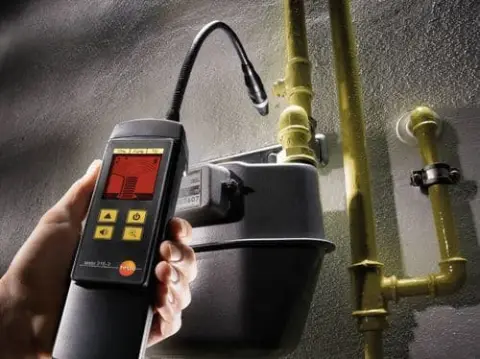
- Instrument testing with combustible gas detectors to locate and quantify gas presence
- Isolation testing by shutting off sections to narrow down the leak location
- Pressure testing (where allowed by code and utility requirements) to confirm system integrity
- Appliance connection inspection (connectors, shutoff valves, sediment traps/drip legs where applicable)
Soapy water can help identify very small leaks at accessible joints, but it does not replace proper diagnostic tools, pressure tests, or code-based verification. Remember: the goal is not just to “stop the smell,” but to confirm the system is safe to operate.
What it typically costs to fix a gas line issue in Spring Valley
Costs vary widely based on access (attic/crawl space vs. behind walls), how many joints must be remade, whether permits are needed, and whether replacement is required. Still, it helps to understand the categories of work you may see.
| Issue type | What usually drives cost | Why timing matters |
|---|---|---|
| Minor leak at exposed fitting | Accessibility, number of joints, testing after repair | Small leaks can worsen; early repair avoids larger scope |
| Appliance connector/valve replacement | Correct parts, code compliance, shutoff integrity, re-lighting procedures | Delaying can lead to repeated ignition failures and safety shutdowns |
| Underground leak near meter/yard line | Locating, excavation, pipe material, tracer wire, restoration | Outdoor leaks can migrate toward structures; fix sooner |
| Partial or whole-home re-pipe | Home layout, permit/inspection, manifold sizing, number of appliances | Recurring leaks often cost more over time than replacement |
If you want the most accurate number, the best approach is an on-site evaluation and a written estimate. Waiting can expand the repair area, which is exactly why the right time to call is as soon as warning signs appear.
Why gas issues can also create carbon monoxide risks
A gas leak and carbon monoxide are different hazards, but they can show up together when appliances are malfunctioning. CO is produced by incomplete combustion and is especially dangerous because it’s odorless.
How gas appliance problems can increase CO risk
- Improper air-to-fuel ratio (often seen as yellow flames)
- Blocked or disconnected venting on water heaters and furnaces
- Backdrafting where exhaust spills into living space
According to the U.S. Centers for Disease Control and Prevention (CDC), hundreds of people die annually in the U.S. from unintentional, non-fire-related carbon monoxide poisoning, and thousands visit emergency departments. If a CO alarm goes off, get everyone to fresh air and contact emergency help first, then have the appliances, venting and gas piping inspected.
When a repair isn’t enough: signs you may need re-piping
Sometimes the real question is whether you’re dealing with a one-time leak or a system that’s reaching end-of-life.
Clues that point toward replacement over repeated repairs
- Multiple leak repairs over the last few years
- Visible corrosion on several sections of pipe
- Older materials or improper transitions between materials
- Remodeling plans that will add appliances or change load (requiring proper resizing)
- Leaks occurring in concealed spaces (walls/ceilings), making “patch” repairs risky
If leaks are recurring, you still need a plumber—but the discussion may shift from “fix this joint” to “make the whole system reliably safe.” Proper leak detection and pressure testing come first, so the plan is based on what the system actually needs.
How to prevent gas line problems (without DIY risk)
You can reduce the odds of a 2 a.m. gas emergency by focusing on safe prevention—without attempting unlicensed gas work.
Safe prevention checklist
- Keep appliance areas ventilated and don’t block combustion air openings
- Schedule periodic inspections when replacing appliances or after renovations
- Replace aging connectors when installing a new range or dryer (installed to code)
- Install and maintain CO alarms according to manufacturer instructions
- Know where your shutoff is and keep it accessible
To understand the broader system components involved, it helps to know the basics of plumbing and how gas piping integrates with appliance venting, water heating, and household safety devices.
What to expect during a gas line service visit
Homeowners also want to know how disruptive the process is. In many homes, the visit is straightforward—especially for accessible leaks.
Typical steps
- Interview and walkthrough (where the smell occurs, when it started, which appliances were running)
- Safety checks (shutoffs, ventilation, initial readings)
- Leak location using detection equipment
- Repair or isolation of the affected section
- Verification (re-test after repair; confirm safe operation)
- Appliance restart where appropriate (following safe lighting procedures)
If the issue involves more than gas (for example, a water heater installation, combustion air problems, or related piping), you may need additional plumbing services. In some cases, work overlaps with Water / Sewer / Gas Lines to address the full piping system safely and to code.
Why acting fast matters: real-world incident patterns
Delaying service is one of the biggest mistakes homeowners make with gas symptoms. The National Fire Protection Association (NFPA) reports that U.S. fire departments respond to hundreds of thousands of home structure fires each year, and gas-fueled equipment is a known ignition source category. While many gas odor calls don’t end in a fire, the risk is serious enough that industry guidance is consistent: treat gas odors and abnormal combustion as urgent.
A practical example of “small symptom, big outcome”
- A homeowner notices a stove burner clicking repeatedly and a faint odor only at night.
- Over days, the odor becomes more frequent as fittings loosen further from appliance vibration.
- A routine action (like switching on a light) can create ignition risk in the wrong conditions.
This is why the decision to call should be based on the first confirmed warning sign—not on whether the smell is “strong enough yet.”
Fast answers people want when deciding to call
Use these quick rules if you’re still unsure whether to call:
- If you smell gas: leave, avoid switches, contact the utility/emergency help, then call for repair.
- If flames are yellow or you see soot: stop using the appliance and schedule immediate inspection.
- If you feel dizzy or nauseated indoors: get fresh air and seek medical help; don’t “sleep it off.”
- If an appliance keeps shutting off: don’t bypass safety controls—get it checked.
- If you recently moved/installed an appliance: any gas odor afterward means it’s time to call.
“Safety First, Code Always”
Gas piping work should be performed and verified using code-compliant methods and proper test equipment, with attention to combustion safety, ventilation, and shutoff accessibility. The safest approach is to rely on trained, licensed professionals who routinely work with fuel gas systems, pressure testing, and inspection requirements—for anything beyond a simple question.
If you’re seeing symptoms now—odor, hissing, yellow flames, pilot issues, or health effects—call a gas line plumber immediately and stop using the affected appliances until the system is confirmed safe.
Frequently Asked Questions
Smell Gas? Don’t Wait—Get a Pro on It Today
Gas line issues don’t “sort themselves out”—they escalate. If you’re noticing a rotten-egg odor, yellow flames, a pilot that won’t stay lit, or any hissing near an appliance or meter, the safest move is to stop guessing and get an expert to confirm what’s going on. Once any gas odor has been handled by SDG&E, our team can inspect, locate, and repair gas line problems. Call (619) 304-0144 to schedule a visit.