In this article (13 sections)
- Key Takeaways
- How to Tell It’s a Main Sewer Line Clog (Not a Single Drain)
- Early Warning Signs You Shouldn’t Ignore
- Common Causes of Sewer Line Blockages in Spring Valley Homes
- What to Do Immediately When You Suspect a Main Line Backup
- How a Plumber Diagnoses a Clogged Main Sewer Line
- Drain Clearing Methods: What Works (and When)
- Why DIY Fixes Often Fall Short (and Can Backfire)
- Preventing Repeat Sewer Backups
- What to Expect During a Professional Clearing Visit
- Getting Your Home Back to Normal—Safely
- Frequently Asked Questions
- Get Clear Answers on Your Sewer Line Backup—And the Right Fix
Key Takeaways
When multiple drains back up, the lowest fixtures overflow first, or toilets gurgle, the issue is often a main sewer line restriction rather than a single fixture clog. Reducing overflow risk starts with stopping water use and avoiding chemical drain openers, then using evidence-based diagnosis (often via cleanout access and camera inspection) to choose the right clearing method or confirm whether repair is needed.
- Main-line vs. single-drain clues: Multiple fixtures backing up together, sewage odors near drains/cleanouts, and gurgling or bubbling toilets—especially affecting the lowest drains first—typically indicate a blockage in the shared building sewer line, though neighborhood-wide issues can also suggest a public main problem.
- Act fast to limit contamination and damage: If you suspect a main line backup, stop using all plumbing fixtures, shut off toilet supply valves if needed, keep people and pets away from affected areas, and avoid chemical drain cleaners because they often don’t clear main clogs and can create hazards during professional cable work.
- Clearing is method- and condition-dependent: Snaking can reopen flow but may leave grease/sludge on pipe walls, root cutting targets root masses that cause recurring clogs, and hydro jetting scours buildup but is often preceded by camera inspection to confirm the pipe isn’t fragile or damaged—and if cracks, offsets, bellies, or collapse are present, repeated clearing may be only temporary until repairs are made.
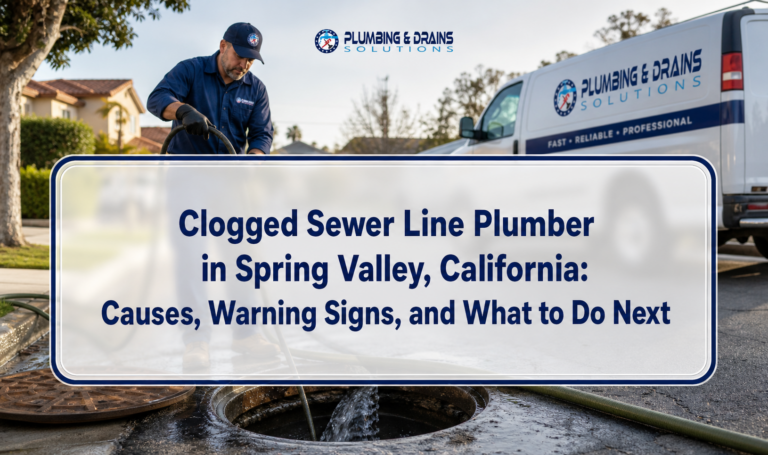
A clogged sewer line plumber Spring Valley can diagnose and clear a main sewer blockage when multiple drains back up, toilets gurgle, or sewage odors start coming from fixtures or cleanouts. In Spring Valley, these problems often point to an obstruction in the building sewer or the connection to the public main, not just a single sink or shower drain.
Common causes include grease and food waste buildup, “flushable” wipes, heavy paper use, and roots entering through small cracks or joints in older piping. Because sewer line issues can involve contaminated wastewater and hidden pipe damage, proper equipment and safe handling—such as camera inspection, locating the cleanout, and using the right drain-cleaning method—matter for both health and preventing repeat clogs.
This guide covers the most likely causes, early warning signs that indicate a main line problem, and what to do next—from immediate steps to reduce overflow risk to what a plumber may check during an inspection and clearing.
How to Tell It’s a Main Sewer Line Clog (Not a Single Drain)
When several fixtures misbehave at once, the blockage is usually in the building sewer line rather than a branch drain serving one sink or tub. Paying attention to which fixtures back up first can help a clogged sewer line plumber Spring Valley pinpoint where the obstruction likely sits.
A single slow sink often points to a localized clog near that fixture. In contrast, the main sewer line is the shared pathway for wastewater leaving the home, so trouble there shows up across multiple drains—especially the lowest ones.
- Multiple drains back up together: A tub, shower, or floor drain backing up when a toilet flushes or washing machine drains is a classic main-line sign.
- Lowest fixtures overflow first: Ground-floor tubs, showers, and floor drains typically show symptoms before upstairs fixtures.
- Toilet gurgling or bubbling: Air gets displaced when wastewater can’t move freely, causing gurgling in toilets or nearby drains.
- Sewage odor near drains or cleanouts: Standing waste and disrupted trap seals can release unpleasant smells.
- Intermittent “almost normal” behavior: Partial blockages may drain slowly, then surge/overflow when another fixture adds flow.
If your neighbors are experiencing similar issues at the same time, the problem could also be beyond your property line in the public main. A plumber can help differentiate with inspection and flow tests.
Early Warning Signs You Shouldn’t Ignore
Small changes in how drains sound or empty can be the earliest clue of a developing sewer restriction. Acting early can reduce the chance of an overflow event and water damage.
Some warning signs are subtle and easy to dismiss until multiple fixtures are affected. The goal is to recognize patterns that suggest increasing resistance in the sewer line.
- Recurring slow drains in different bathrooms or fixtures within days or weeks
- Frequent toilet clogs despite “normal” paper use
- Drain flies or persistent musty odors around seldom-used drains (sometimes linked to buildup)
- Washing machine discharge causes nearby backup in tubs or floor drains
- Cleanout seepage or dampness near the cap (do not open if you suspect a blockage)
Because sewer water can carry pathogens, avoid direct contact and treat any seepage as contaminated until cleaned and disinfected appropriately.
Common Causes of Sewer Line Blockages in Spring Valley Homes
Most main sewer clogs come down to buildup, improper flushing, or physical intrusion/damage to the pipe. Older piping materials and shifting soil can also contribute to recurring restrictions.
Identifying the cause matters: clearing the line is one step, but preventing repeat blockages often requires changing habits, removing roots, or repairing damaged sections.
Grease, Food Waste, and “Soft” Buildup
Fats, oils, and grease cool inside piping, where they trap debris and slowly reduce the pipe’s internal diameter. Even if a kitchen sink seems fine, grease can harden farther downstream and create a main line restriction.
- Grease washed down with hot water (it cools later in the line)
- Starchy foods (rice, pasta) that swell and bind with grease
- Heavy soap scum and detergent buildup in some drain paths
If you frequently use the garbage disposal, it can increase solids load in the drain system; food particles can accumulate at rough pipe joints or belly/sag points.
“Flushable” Wipes and Heavy Paper Use
Many products marketed as flushable do not break down like toilet paper and can snag on imperfections in the line. Over time, they form rope-like masses that catch additional debris.
- Wipes (even “septic-safe” labels can still cause problems)
- Paper towels, feminine products, cotton swabs, dental floss
- Excessive toilet paper use during illness or guest stays
Tree Root Intrusion
Roots seek moisture and can enter through tiny cracks, joints, or deteriorated sections of older sewer piping. Once inside, they can create a net that traps paper and solids, leading to repeated backups.
Root issues often present as recurring clogs that return weeks or months after snaking. Camera inspection is usually needed to confirm the extent and exact location.
Pipe Damage, Offsets, and “Bellies”
Physical defects can mimic or worsen clogs by creating choke points where solids settle. Ground movement, aging materials, and prior repairs can all contribute.
- Offsets: Pipe sections shift so edges catch debris.
- Bellies (sags): A low spot holds standing water and solids.
- Cracks/collapse: Waste catches on broken edges or cannot pass at all.
When structural issues exist, repeated clearing may offer only temporary relief until repairs are made.
What to Do Immediately When You Suspect a Main Line Backup
Fast, careful steps can reduce overflow risk and limit contamination inside the home. The key is to stop adding flow and avoid unsafe DIY methods that can worsen the situation.
If wastewater is already backing up, treat the area as a contamination hazard and prevent children and pets from accessing it.
- Stop using all plumbing fixtures: Toilets, sinks, showers, dishwashers, and laundry all add volume that can force sewage out at the lowest opening.
- Shut off water to toilets if needed: Use the angle stop behind the toilet to prevent accidental refills/overflows.
- Avoid chemical drain openers: They often don’t clear main line clogs, can damage piping, and can splash back during professional clearing.
- Check for a cleanout (do not open if unsure): If it’s already leaking, opening it can release sewage under pressure.
- Document symptoms: Which fixtures back up, when, and any gurgling/odor patterns—useful during diagnosis.
- Limit exposure: Use gloves if you must handle items, and plan for proper cleaning/disinfection after the line is cleared.
If there’s active flooding or risk of electrical contact, prioritize safety and consider contacting a restoration specialist after the plumbing issue is addressed.
How a Plumber Diagnoses a Clogged Main Sewer Line
Professional diagnosis focuses on confirming whether the problem is in a branch line, the building sewer, or downstream toward the public main. The right tools help locate the blockage and choose the most effective clearing method.
A clogged sewer line plumber Spring Valley will typically start with symptom mapping, then move to access points like cleanouts to evaluate flow and verify the obstruction.
Finding and Using the Correct Cleanout
Cleanouts provide an access point to the sewer line for inspection and clearing. Using the correct cleanout reduces mess, improves reach, and can prevent damage to fixtures.
- Exterior cleanouts are often near the foundation or property line.
- Some homes have interior cleanouts in basements, garages, or utility areas.
- If no accessible cleanout exists, a plumber may recommend adding one for safer future service.
For homeowners planning improvements, sewer clean-out installation can make future clearing and inspections faster and less disruptive.
Sewer Camera Inspection (Video)
A video camera inspection can show root intrusion, grease buildup, offsets, cracks, and other structural issues. It’s especially useful when clogs recur or when you need to confirm whether repairs are required.
Depending on the situation, the plumber may recommend a dedicated sewer video inspection before or after clearing to verify the line is open and identify any defects that could cause repeat problems.
Determining Whether the Issue Is Private or Public
Not all blockages are on the homeowner’s side; sometimes the public main is involved. Diagnosis often considers where the backup appears and whether nearby homes are affected.
- If the clog is between the home and the property line, it’s typically within the private building sewer.
- If flow is clear to the property line but backups persist, the obstruction may be downstream.
- Camera location tools can help map problem areas without unnecessary digging.
Drain Clearing Methods: What Works (and When)
No single method fits every clog; the best approach depends on the clog material, pipe condition, and whether roots or damage are present. A professional may combine methods to restore full flow.
Choosing the right tool matters because aggressive methods can damage compromised piping, while mild methods may leave residue that quickly clogs again.
| Method | Best For | Limitations / When to Avoid |
|---|---|---|
| Drain snake / cable auger | Breaking through localized clogs; retrieving some debris; opening flow quickly | May leave grease/sludge on pipe walls; can struggle with heavy roots or structural defects |
| Root cutting with specialized cutter heads | Removing root masses that repeatedly trap paper and solids | Roots can return if cracks/joints remain; damaged pipes may need repair rather than repeated cutting |
| Hydro jetting | Scouring grease, sludge, and buildup; flushing fine roots and restoring pipe wall capacity | Not ideal for fragile/collapsed lines; often preceded by camera inspection to confirm pipe condition |
| Spot repair / replacement | Collapsed pipe, severe offsets, repeated failures at the same point | More invasive than clearing; scope depends on depth, access, and extent of damage |
When Hydro Jetting Makes Sense
Hydro jetting uses high-pressure water to clean the inside of the pipe rather than just punching a hole through the clog. It can be especially effective for recurring grease-related restrictions and heavy sludge buildup.
If a plumber suspects fragile piping, they may recommend a camera inspection first to avoid worsening cracks or weak sections. Learn more about hydrojetting and when it’s an appropriate choice.
When You May Need Sewer Repair Instead of Another Clearing
If the line repeatedly clogs at the same location, the problem is often structural rather than behavioral. Repairs can range from replacing a short damaged segment to addressing a longer run if there’s widespread deterioration.
- Camera shows cracks, severe root entry points, or collapse
- Frequent backups return shortly after clearing
- Evidence of a belly where solids continually settle
In these scenarios, sewer repair may be the lasting solution, with the repair plan guided by inspection findings and access constraints.
Why DIY Fixes Often Fall Short (and Can Backfire)
Main sewer clogs involve larger diameter piping, heavier debris loads, and sometimes contaminated spill risk. Many common DIY tactics don’t address the full blockage or may create hazards for the next person working on the line.
Chemical drain cleaners are a frequent problem: they are typically formulated for small branch clogs, can be ineffective against wipes/roots, and may remain in the line where they pose burn risks during cable work.
- Plunging can move the problem: It may temporarily shift debris to a tighter point.
- Small hand augers often can’t reach: Mainline cleanouts may be far from affected fixtures.
- Boiling water doesn’t fix wipes/roots: It may soften grease near the entry but not remove buildup downstream.
- Misuse can damage fixtures: Aggressive augering through toilets can crack porcelain or damage wax seals.
If you want to understand how drains and sewer lines fit into the broader household system, a plain-language overview of plumbing can be helpful—especially when deciding whether symptoms point to a local drain issue or a system-level restriction.
Preventing Repeat Sewer Backups
Prevention is usually a mix of better disposal habits, routine maintenance, and addressing any confirmed pipe defects. The best prevention plan depends on whether the cause was buildup, roots, or pipe damage.
If your home has a history of backups, preventive steps can reduce emergency risk—but they can’t always overcome an underlying structural failure.
Everyday Practices That Reduce Clog Risk
Small habit changes can dramatically reduce what accumulates in the building sewer. The goal is to keep fats, solids, and non-dispersing materials out of the line.
- Put grease in a container and dispose of it in the trash (not the sink)
- Trash wipes and hygiene products—don’t flush them
- Use toilet paper in reasonable amounts; consider multiple flushes when needed
- Use sink strainers to catch food scraps and debris
- Run plenty of water when using the disposal, and avoid fibrous foods
For ongoing care strategies, drain maintenance guidance can help you align habits and service intervals with your home’s plumbing layout and usage patterns.
Root Management and Yard Planning
If roots were identified, long-term prevention may require both clearing and addressing the entry point. Simply cutting roots may restore flow, but it may not prevent re-growth if cracks/joints remain open.
- Ask whether roots were light, moderate, or heavy during clearing
- Consider periodic camera checks if the same area repeatedly clogs
- Be cautious planting trees/shrubs near the sewer route (exact distances vary by species and site conditions)
When a Cleanout Upgrade Is Worth It
Some homes have hard-to-access or missing cleanouts, making emergency clearing slower and messier. An added cleanout can improve safety and access for both cable clearing and camera inspections.
- Older homes that never had a properly located exterior cleanout
- Homes with frequent backups where quick access matters
- Properties where interior access would risk contamination during a backup
What to Expect During a Professional Clearing Visit
Most service calls follow a practical sequence: confirm symptoms, access the line, clear the obstruction, then verify flow. In more complex cases, inspection and location steps guide whether repairs are needed.
Clear communication helps: tell the plumber which fixtures are affected, when the issue started, and whether you’ve used chemicals or attempted DIY snaking.
- Initial assessment: Questions, fixture checks, and identifying the best access point.
- Protection and setup: Containment measures to manage splash and contamination risk.
- Line clearing: Cable, cutting heads, or jetting depending on suspected cause and pipe condition.
- Flow verification: Running water at fixtures to confirm proper drainage.
- Optional camera verification: Identifying roots, bellies, offsets, or damage that could cause recurrence.
- Next-step recommendations: Maintenance, additional cleaning, or repair planning if defects are present.
If you’re dealing with frequent clogs in sinks, showers, or tubs that may be contributing to system strain, targeted drain cleaning for branch lines can be part of preventing the next main-line event.
Getting Your Home Back to Normal—Safely
Once the line is cleared, the next priority is safe cleanup and reducing the chance of a repeat backup. Your plumber can advise if any fixtures or areas should be professionally cleaned due to sewage exposure.
After service, monitor for early warning signs during the next week—especially after laundry loads or multiple consecutive showers—to confirm the line is moving full flow.
- Flush toilets and run multiple fixtures briefly to confirm stable drainage
- Listen for gurgling that could indicate lingering restriction
- Watch the lowest drains for slow return or dampness
- Schedule inspection/repair planning if camera findings showed damage, offsets, or recurring root entry
If you’re seeing repeat symptoms, a clogged sewer line plumber Spring Valley can use camera confirmation and the right cleaning method to address both the blockage and the condition that caused it, helping you avoid the cycle of “temporary” fixes.
Frequently Asked Questions
Get Clear Answers on Your Sewer Line Backup—And the Right Fix
When multiple drains back up or you notice gurgling and sewer odors, guessing can lead to repeat clogs and avoidable mess. Plumbing & Drain Solutions of Spring Valley can help confirm whether the issue is in a branch drain, your main sewer line, or farther downstream, so the next step is based on evidence—not trial and error.
A professional assessment can also reduce exposure to contaminated wastewater and help prevent pipe damage from the wrong tools or chemicals. If you’re ready to stop the cycle and understand what’s really happening in your line, reach out for next-step guidance.