In this article (10 sections)
- Key Takeaways
- How to Tell If Water Pressure Problems Are Fixture-Specific or Whole-House
- Common Causes of Low or Fluctuating Pressure in Spring Valley Homes
- Safe DIY Troubleshooting Checklist (Before Calling a Plumber)
- When to Call a Licensed Plumber (Red Flags You Shouldn’t Ignore)
- Quick Reference: Normal Pressure Concepts vs. What the Symptoms Suggest
- Preventing Repeat Water Pressure Issues
- Getting to a Reliable Fix Without Guesswork
- Frequently Asked Questions
- Get to the Root Cause of Your Spring Valley Water Pressure Issues
Key Takeaways
Most water pressure problems Spring Valley homeowners notice are resolved fastest by first confirming whether the issue is fixture-specific or whole-house, then doing a few safe checks (aerators, valve positions, hose bib flow, and meter movement) to identify restrictions, regulator issues, or leak clues. If pressure won’t stabilize or you see warning signs like banging pipes or moisture near the meter or foundation, professional diagnosis helps avoid guesswork and potential damage.
- Fixture vs. whole-house pattern: Testing at least two cold fixtures and two hot fixtures helps pinpoint whether you’re dealing with a local restriction (like an aerator, cartridge, or stop valve) or a broader issue involving the main valve, PRV, leak, or municipal supply changes.
- Restrictions and valve positions are common culprits: Partially closed main/fixture shutoffs and mineral buildup in aerators or showerheads can make pressure seem low, so verifying valve positions and cleaning outlet screens are safe first steps before disassembling major plumbing.
- Unstable pressure can signal PRV failure or hidden leaks: Pressure that surges, drops across the whole house, or won’t stabilize—especially alongside meter movement with all water off, recurring debris, or visible moisture—suggests a failing pressure regulator or a leak that should be checked promptly.
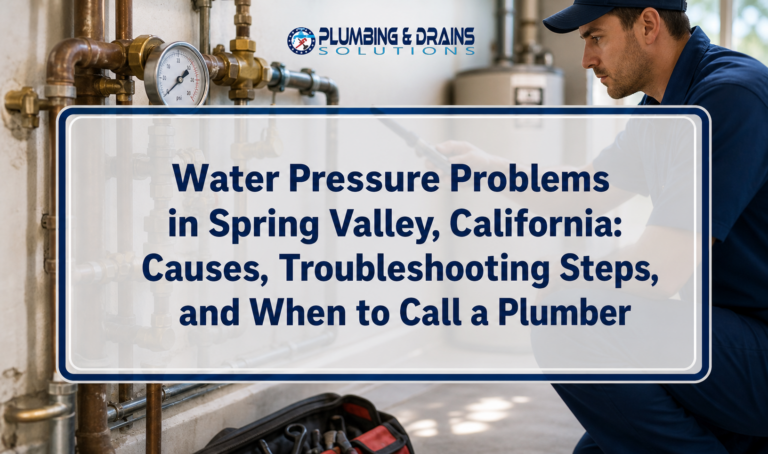
Water pressure problems Spring Valley homeowners notice—like weak showers, slow-filling toilets, or sputtering faucets—are most often caused by a failing pressure regulator, partially closed shutoff valves, mineral buildup, or leaks somewhere in the plumbing system.
In Spring Valley, water pressure can also vary with normal demand changes and elevation differences, so it helps to confirm whether the issue is limited to one fixture, affects the whole house, or changes at specific times of day. Because low pressure and sudden pressure drops can point to hidden leaks, checking promptly can prevent water damage and higher bills.
This guide covers common causes, safe troubleshooting steps you can do yourself (like checking aerators, hose bib flow, and valve positions), and the warning signs—such as pressure that won’t stabilize, banging pipes, or moisture around the meter—that mean it’s time to call a licensed plumber.
How to Tell If Water Pressure Problems Are Fixture-Specific or Whole-House
The fastest way to narrow down water pressure problems Spring Valley homeowners face is to determine whether the issue is isolated to one faucet/shower or affects every fixture. That single distinction points you toward very different fixes—from a clogged aerator to a failing pressure regulator or hidden leak.
Start by checking at least two cold-water fixtures (like a kitchen faucet and an outdoor hose bib) and two hot-water fixtures (like a bathroom sink and shower). If only one fixture is weak, the cause is usually local to that fixture. If multiple fixtures drop at once, focus on valves, the pressure regulator, the meter area, or the main water service line.
- One fixture low: clogged aerator, cartridge/supply stop partially closed, kinked connector, localized mineral buildup.
- Only hot water low: water heater shutoff partially closed, sediment issues, hot-side piping restriction.
- Whole house low: partially closed main valve, pressure regulator (PRV) failing, leak, municipal supply issue.
- Pressure changes at certain times: neighborhood demand swings; could also reveal a regulator that can’t keep up.
Common Causes of Low or Fluctuating Pressure in Spring Valley Homes
Most pressure complaints come down to restrictions, failing control components, or leaks. Understanding the most likely causes helps you troubleshoot safely and decide when to bring in a licensed plumber.
Partially Closed Main Shutoff or Fixture Stop Valves
A valve that’s not fully open can reduce flow enough to feel like “low pressure,” especially at showers and toilets. This often happens after plumbing work, a meter change, or emergency shutoffs.
Typical valves to check include the main shutoff at/near the meter, the house shutoff where the line enters, and fixture stops under sinks and behind toilets. If you don’t know the valve type (gate vs. ball valve), avoid forcing it—old valves can break or start leaking when disturbed.
- Confirm the main shutoff is fully open (handle parallel to pipe for most ball valves).
- Check toilet and sink stops are fully open (typically counterclockwise).
- If a valve is stuck, corroded, or dripping after adjustment, stop and plan for repair.
If you want a clear walkthrough of where these valves are commonly located and how they’re used, see water and gas emergency shut-off valves.
Failing Pressure Regulator (PRV)
A pressure regulator can wear out internally and cause pressure to drop, surge, or “hunt” (rise and fall repeatedly). If your home has a PRV, it’s one of the first components to suspect when the entire house is affected.
PRVs can fail in a few ways: the internal spring/diaphragm weakens, debris scores the seat, or mineral buildup restricts moving parts. Symptoms commonly include pressure that won’t stabilize, sudden changes when another fixture turns on, or a noticeable difference between morning and evening pressure beyond normal demand shifts.
Because adjusting a PRV incorrectly can create high-pressure conditions (which may stress hoses, supply lines, and appliance valves), it’s safest to have diagnosis and replacement handled by a pro if readings look abnormal or inconsistent. Relevant service: water pressure regulators.
Clogged Aerators, Showerheads, or Faucet Cartridges
Mineral buildup and debris can restrict flow at the point of use, making pressure seem low only where you notice it most. This is especially common on showerheads and bathroom faucets.
If the problem is isolated to a single fixture, remove the aerator or showerhead and inspect the screen for grit. If you have galvanized/cast iron piping or older supply lines, intermittent debris can recur until underlying pipe conditions are addressed.
- Unscrew the aerator/showerhead and rinse the screen.
- Soak parts in vinegar briefly to loosen scale (follow fixture manufacturer guidance).
- If flow improves with the aerator removed, replace or clean it thoroughly.
Leaks That Reduce Available Pressure (Including Slab Leaks)
A leak doesn’t always show as a puddle—water can run under slabs, behind walls, or out at the service line. When enough water is escaping, pressure and flow at fixtures can drop or fluctuate.
Warning signs include a spinning/leaking meter when all fixtures are off, damp spots, musty odors, unexplained warm areas on floors (hot-water line leaks), or a sudden increase in water bills. If you suspect a leak under the foundation, it may require specialized diagnosis and repair planning; see slab leak service for common next steps.
Water Heater or Hot-Side Restrictions
If only hot water is weak, the issue is usually on the hot side: a partially closed water heater shutoff, sediment-related restrictions, or aging piping. Crossovers (where hot and cold mix unintentionally) can also create strange pressure and temperature behavior.
- Verify the hot outlet valve at the water heater is fully open.
- Check whether only one bathroom has hot-side issues (pointing to a local cartridge or stop valve).
- If hot water pressure is poor everywhere, consider a professional inspection of the system; see water heater service.
Drain or Sewer Issues That Mimic “Pressure” Problems
Sometimes the complaint is really “slow fixtures” rather than low supply pressure—especially when toilets don’t flush well or tubs take forever to drain. If water backs up or drains slowly, the fix is on the drain side, not the supply side.
If multiple drains are slow (or you notice gurgling), it may indicate a developing blockage in the main drain line. In those cases, targeted cleaning methods like drain cleaning can restore normal function without chasing the wrong “pressure” cause.
Safe DIY Troubleshooting Checklist (Before Calling a Plumber)
You can rule out many simple causes with a short, careful checklist—without disassembling major plumbing or risking damage. Stop if you see active leaks, corrosion, or any sign that a valve or fitting may fail when touched.
Step 1: Check One Strong Baseline Fixture (Preferably a Hose Bib)
An outdoor hose bib often provides a good comparison because it typically has no aerator and fewer restrictions. If flow is strong at the hose bib but weak inside, you’re likely dealing with fixture restrictions or interior valve issues.
- Turn off all water-using appliances (dishwasher, washing machine, sprinklers).
- Open the hose bib fully and observe whether flow is steady or sputtering.
- Compare to a kitchen cold faucet with the aerator removed (briefly).
Step 2: Verify Valve Positions (Main + Fixture Stops)
Partially closed valves are common and easy to miss. Confirm the main shutoff(s) and the stops serving problem fixtures are fully open.
- Main shutoff at meter/entry: open fully.
- Under-sink stops: open fully and ensure supply lines aren’t kinked.
- Toilet stop: open fully; inspect the fill valve for clogs if refill is slow.
Step 3: Clean Aerators and Showerheads
If a single faucet or shower is weak, cleaning the outlet screen is often the fix. This is especially true after street work, meter service, or any event that can stir debris into the line.
- Remove the aerator/showerhead.
- Rinse screens and remove visible grit.
- Reinstall and test; if improvement is dramatic, replace the aerator if it’s worn.
Step 4: Do a Basic Meter Movement Check (Leak Clue)
A simple meter check can reveal continuous water use when everything is “off,” which may indicate a leak. If your meter has a small leak indicator dial/triangle, even slight movement can be meaningful.
- Turn off all fixtures and ensure no appliances are running.
- Look at the meter indicator and wait a few minutes.
- If it moves steadily, treat it as a leak clue and investigate further.
If you see moisture near the meter box, pooling, or mud that stays wet, avoid digging—call a professional to locate the leak safely.
When to Call a Licensed Plumber (Red Flags You Shouldn’t Ignore)
Some symptoms point to conditions that can worsen quickly, cause damage, or require specialized tools. If you notice these, it’s usually more cost-effective to get a professional diagnosis sooner rather than later.
- Pressure won’t stabilize after basic checks (suggests PRV failure or upstream issues).
- Banging pipes (water hammer) or loud vibration when fixtures shut off.
- Visible moisture at the meter, at the foundation, or under sinks.
- Sudden pressure drop across the whole house without a clear cause.
- Discolored water or persistent debris clogging screens repeatedly.
- Multiple fixtures affected (hot and cold) plus an unexplained bill increase.
Plumbers typically diagnose whole-house water pressure problems Spring Valley residents report by combining pressure testing, flow evaluation at hose bibs, inspection of the main shutoff/PRV, and targeted checks for hidden leaks or failing components.
Quick Reference: Normal Pressure Concepts vs. What the Symptoms Suggest
Low “pressure” can be caused by low incoming pressure, restricted flow, or fixture limitations. The table below helps connect common symptoms to likely next checks without assuming a one-size-fits-all answer.
| Symptom / Observation | Most Likely Cause(s) | Best Next Step |
|---|---|---|
| Only one faucet has weak flow | Clogged aerator, cartridge, or partially closed stop valve | Remove/clean aerator, verify stop valve is fully open, then retest |
| Whole house low pressure (hot and cold) | Partially closed main valve, failing PRV, service-line restriction, or leak | Check main valve position and meter activity; consider PRV/line evaluation |
| Hot water weak everywhere, cold is fine | Water heater valve partially closed, hot-side restriction, sediment-related issues | Verify heater shutoff is open; schedule inspection if problem persists |
| Pressure surges or fluctuates when fixtures run | PRV instability, demand changes, or failing valve components | Measure pressure with a gauge; if unstable, have PRV tested/replaced |
| “Slow toilet” or poor flush with normal faucet pressure | Toilet fill/flush component issues or drain-side blockage | Inspect fill valve and tank parts; if drains are slow too, evaluate drain line |
Preventing Repeat Water Pressure Issues
A few maintenance habits can reduce recurring clogs, valve problems, and surprise pressure drops. Prevention is especially helpful in homes with older piping or areas that see periodic debris after utility work.
- Clean faucet aerators and showerheads periodically if you notice mineral scale.
- Exercise shutoff valves carefully (open/close gently) so you know they work before an emergency—replace valves that drip or seize.
- Watch for early leak signals such as unexplained meter movement or damp spots.
- Address drain performance promptly so slow drainage doesn’t get mistaken for low supply pressure; helpful guidance is available in drain maintenance.
When you do need repairs, it can help to understand that plumbing systems are a combination of supply piping, control valves, fixtures, and drainage components—each can create different “pressure-like” symptoms depending on where the restriction or failure occurs. A clear overview of what plumbing includes is available at plumbing.
Getting to a Reliable Fix Without Guesswork
The most effective way to resolve water pressure problems Spring Valley homeowners experience is to match the symptom pattern to the part of the system that can actually cause it. A couple of quick checks—fixture screens, valve positions, a hose bib comparison, and a basic meter check—often reveal whether you’re facing a simple restriction or something more serious like PRV failure or a hidden leak.
If pressure remains inconsistent, drops across the whole house, or is paired with noise, moisture, or recurring debris, professional diagnosis can prevent repeat repairs and help protect your home from water damage. By documenting when the issue occurs, which fixtures are affected, and what you’ve already checked, you’ll also help your plumber pinpoint the cause faster.
Frequently Asked Questions
Get to the Root Cause of Your Spring Valley Water Pressure Issues
If your showers have gone weak, faucets sputter, or pressure seems to change without warning, a targeted inspection can help you avoid replacing parts that aren’t actually causing the problem. Plumbing & Drain Solutions of Spring Valley can help you narrow down whether you’re dealing with a valve issue, mineral restriction, a pressure regulator problem, or a leak affecting your home’s supply.
Professional testing can confirm what’s happening at the meter and key fixtures, and it can identify conditions that merit prompt repair—like unstable pressure or moisture near plumbing components—before they turn into higher water bills or property damage.