In this article (14 sections)
- What Counts as an “Emergency” Water Leak in Spring Valley?
- What You’re Really Paying for in an Emergency Leak Repair
- Price Ranges by Leak Type (Quick Reference)
- Key Factors That Change Emergency Leak Repair Costs
- What You Can Do Immediately to Reduce Damage (and Potential Cost)
- How Plumbers Diagnose Hidden Leaks During Emergencies
- Repair Options and How They Affect Pricing
- Insurance, Documentation, and What’s Typically Covered
- Preventing the Next Emergency: Cost-Effective Steps
- Red Flags That Mean You Should Call Now (Not Later)
- Choosing a Plumber for Emergency Work (Without Guessing)
- Peace of Mind, Not Panic: Your Next Move
- Frequently Asked Questions
- Stop the Leak Fast—Before It Turns Into a Full-Blown Disaster
Short answer: Emergency leak repair costs depend mainly on when the call happens (after-hours visits cost more), how long it takes to find the leak, how hard it is to reach (under a sink versus under a slab), the pipe material and any water damage drying. Shutting off the main valve quickly and asking for an itemized estimate helps control the total.
If you suspect a water leak in Spring Valley, California, start by checking for sudden water bill spikes, damp spots on walls or ceilings, and the sound of running water when everything is off. For example, if your water meter keeps moving after you shut off all faucets and appliances, that’s a strong sign of a hidden leak. If you notice soggy soil near the foundation, warm spots on a slab floor, or water pooling under a sink, you’ll likely need immediate attention—and knowing what drives emergency repair costs can help you act fast without guessing.
What Counts as an “Emergency” Water Leak in Spring Valley?
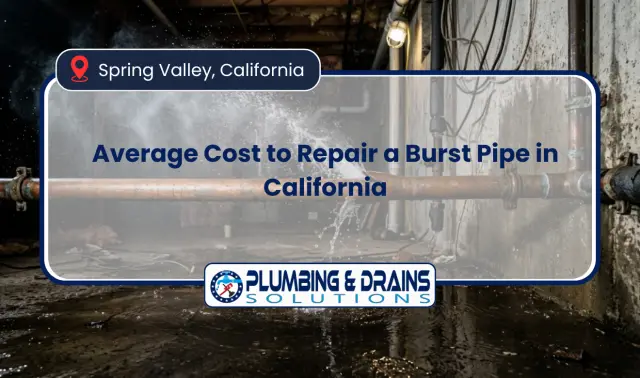
An emergency leak is any situation where water is actively damaging your property, creating a safety risk, or likely to worsen quickly. In Spring Valley homes—especially slab foundations and older pipe materials—leaks can escalate fast, which is why it helps to know when to shut off the water and call immediately.
Common leak scenarios that typically qualify as emergencies
- Burst pipe (rapid flooding, falling water pressure)
- Water heater leak pooling around the unit or dripping from the T&P valve
- Slab leak (warm spots, unexplained moisture, cracking, sudden bill spikes)
- Main line leak (soggy yard, water meter spinning with fixtures off)
- Leak near electrical outlets or inside walls/ceilings
- Sewer-related overflow that introduces contaminated water (urgent for health reasons)
What You’re Really Paying for in an Emergency Leak Repair
Emergency leak repair usually costs more than a scheduled visit because a plumber is dispatched right away (often nights, weekends, or holidays), and troubleshooting must happen fast. In many cases, the total cost is built from a few predictable parts.
Typical cost components in an emergency repair
- Emergency service call / dispatch (after-hours premium)
- Diagnosis & leak detection (visual checks, pressure testing, acoustic tools, thermal imaging)
- Access work (opening drywall, removing a vanity panel, exposing a pipe run, slab access planning)
- Repair labor (pipe section replacement, valve replacement, fixture repair)
- Materials (copper, PEX, fittings, valves, supply lines)
- Restoration considerations (drying, mold prevention, patching)
So when you compare estimates, you’re not just comparing “a fix”—you’re comparing how quickly the leak is identified, how cleanly it’s accessed, and whether the repair is designed to hold up under local water pressure and conditions.
Price Ranges by Leak Type (Quick Reference)
Below is a general guide to what usually drives the cost of common emergency leaks. Exact totals vary based on severity, accessibility, parts availability, and whether water damage mitigation is required.
| Emergency leak issue | What usually drives the price | Typical first-visit scope |
|---|---|---|
| Burst pipe (visible) | After-hours dispatch, pipe material, shutoff condition | Isolate, replace section, pressure test |
| Leak under sink / supply line | Valve condition, corrosion, cabinetry access | Replace supply line/angle stop, confirm no cabinet damage |
| Slab leak (suspected) | Detection time, reroute vs. spot repair, flooring type | Leak locate, isolate, propose repair plan (often immediate containment) |
| Main line leak (yard) | Depth, soil conditions, permits, location of break | Expose, repair/replace section, restore water |
If you’re trying to plan financially, the best move is to ask for a breakdown that separates dispatch, diagnosis, and repair. That makes estimates easier to compare apples-to-apples.
Key Factors That Change Emergency Leak Repair Costs
Two homeowners can have “a leak,” but the price can differ dramatically. Here are the biggest variables that affect the price.
1) Time of day and response window
- Overnight calls often cost more due to after-hours staffing.
- Holiday dispatch typically includes a premium.
- Faster arrival can cost more but may reduce water damage totals.
2) Leak accessibility (the #1 cost driver)
- Easy access: exposed pipe in garage, under sink, laundry hookups.
- Moderate access: behind drywall, in ceiling chase, tight crawlspace.
- Difficult access: under slab, behind tile shower wall, under built-ins.
3) Pipe material and age
Older homes may have galvanized steel, aging copper, or transitions between materials. Repairs can require extra stabilization to avoid “the next weak point” failing after the immediate fix.
4) Water pressure and regulation
High pressure can accelerate failures. If pressure is out of range, a repair may be temporary unless pressure is corrected, often with a water pressure regulator. (Many residential systems are designed for a controlled range; consistently high pressure stresses joints, valves, and supply lines.)
5) Extent of water damage and required drying
Stopping the leak is step one. If materials stayed wet long enough, professional drying and water damage restoration may be recommended to reduce mold risk. EPA notes that mold can begin growing on wet materials within 24–48 hours under the right conditions, so time matters.
What You Can Do Immediately to Reduce Damage (and Potential Cost)
These steps can lower the total impact and sometimes reduce the final bill by shortening the repair time and limiting damage.
Immediate actions (safe, homeowner-friendly)
- Shut off the main water valve. It is usually where the water line enters the house or in the meter box near the street; find it before you need it, and see our page on water and gas emergency shut-off valves.
- Turn off the water heater (especially if the leak affects hot lines).
- Open faucets to relieve pressure and drain residual water.
- Move valuables and furniture away from wet areas.
- Document the damage with photos for insurance purposes.
- Use towels or a wet/dry vacuum to limit spread—avoid using household vacuums on water.
What not to do
- Don’t ignore a moving meter—small leaks can become big ones quickly.
- Don’t open walls or flooring unless you’re sure it’s safe (electrical hazards).
- Don’t overtighten corroded valves; they can snap and worsen the leak.
How Plumbers Diagnose Hidden Leaks During Emergencies
Understanding the diagnostic process helps you evaluate whether an estimate includes the right steps—or just guesswork. Modern leak detection is often faster and less invasive than “cut and see.”
Common emergency diagnostic methods
- Water meter testing: confirms continuous flow when fixtures are off.
- Pressure testing: checks for pressure drops indicating a leak.
- Acoustic listening: identifies leak noise patterns through slabs/walls.
- Thermal imaging: detects temperature differences from hot-water leaks.
- Moisture meters: maps the extent of saturation in building materials.
In many cases, accurate detection reduces the amount of demolition required—lowering overall disruption even if the emergency service call is higher.
Repair Options and How They Affect Pricing
Once the leak is located, the repair approach can change the price as much as the leak itself.
Spot repair (targeted fix)
- Best for: isolated failures with healthy surrounding pipe
- Pros: fastest restoration, less upfront cost
- Cons: if the system is aged, more leaks may follow
Reroute / re-pipe section (bypass the failure area)
- Best for: slab leaks, hard-to-access runs, multiple weak points
- Pros: can prevent repeated slab access
- Cons: more labor/material, higher immediate cost
Valve replacement (often overlooked)
If the shutoff valve won’t close, the “repair” may require replacing or adding isolation valves. This improves safety for future incidents and can reduce downtime the next time service is needed.
Insurance, Documentation, and What’s Typically Covered
Homeowners often ask whether insurance will help with the cost. Policies vary, but a common pattern is:
- Sudden, accidental leaks may be covered for resulting damage (drywall, flooring) depending on policy.
- Gradual leaks (long-term seepage) are often excluded.
- The plumbing repair itself may or may not be covered; many policies focus on resulting damage.
Documentation checklist
- Photo/video of the leak source (if visible) and affected areas
- Photos of the water meter showing movement (if applicable)
- Written timeline: when you noticed it, actions taken, when water was shut off
- Itemized invoice showing diagnosis vs. repair
Preventing the Next Emergency: Cost-Effective Steps
The best way to control emergency repair costs long-term is to reduce the chance of after-hours failures.
High-impact prevention moves
- Test shutoff valves periodically so they don’t seize when you need them.
- Replace aging supply lines to toilets, sinks, and washers (a common failure point).
- Address slow drains early so backups don’t create overflow damage—professional Drain Cleaning can help prevent pressure and backup-related leaks.
- Watch for recurring clogs that may signal deeper issues—regular drain maintenance can reduce surprise emergencies.
- Learn the basics of plumbing systems so red flags are obvious (a helpful overview is available here: plumbing).
Red Flags That Mean You Should Call Now (Not Later)
If you’re on the fence about calling, these signs usually justify immediate service, because the cost of an emergency visit is typically small compared with the cost of spreading water damage:
- Water is actively spreading across floors or pooling near walls
- Ceiling is bulging, dripping, or staining rapidly
- Water is near electrical panels/outlets
- You can’t shut off the water completely
- Your meter shows constant use with everything off
- You suspect a slab leak (warm floor, unexplained moisture, sudden bill spike)
Choosing a Plumber for Emergency Work (Without Guessing)
When stress is high, it’s easy to focus only on the bottom-line number. But the most reliable way to evaluate an emergency quote is to confirm what’s included and what standard of work you’re getting.
What to ask during an emergency call
- Is the price a flat emergency dispatch plus repair, or bundled?
- Will you perform leak detection before opening walls/floors?
- Do you provide itemized estimates and photos of the repair?
- Is the repair pressure-tested before leaving?
- What warranty applies to labor and parts?
Credentials to look for
- A valid California contractor license and proof of insurance (ask for the license number and verify it on the CSLB website)
- Code-aware repairs and proper materials for potable water lines
- Clear documentation suitable for property records and insurance
- Demonstrated experience with slab foundations, main lines, and emergency isolation
Peace of Mind, Not Panic: Your Next Move
When water is leaking, time is money—literally. The fastest way to control damage is to shut off the water, document what you see, and get a qualified plumber on-site to locate and isolate the issue. With a clear understanding of what drives emergency repair costs, you can approve the right level of response confidently—whether it’s a quick valve and supply-line replacement or a more involved slab leak strategy—without getting stuck in decision paralysis while the leak keeps running.
Plumbing emergencies are high-stakes, but they’re also routine work for experienced professionals equipped to diagnose quickly, repair to code, and help you prevent repeat failures—so you can get back to normal with less disruption and fewer surprises in your final bill.
Frequently Asked Questions
Stop the Leak Fast—Before It Turns Into a Full-Blown Disaster
Seeing a sudden bill spike, hearing water when everything’s off, or spotting damp walls isn’t the time to “wait and see.” The longer a leak runs, the more damage (and cost) it can stack up behind the scenes. If you need straight answers about an emergency leak in Spring Valley, call (619) 304-0144 or contact our team to get your leak isolated, diagnosed, and repaired the right way—without the guesswork.